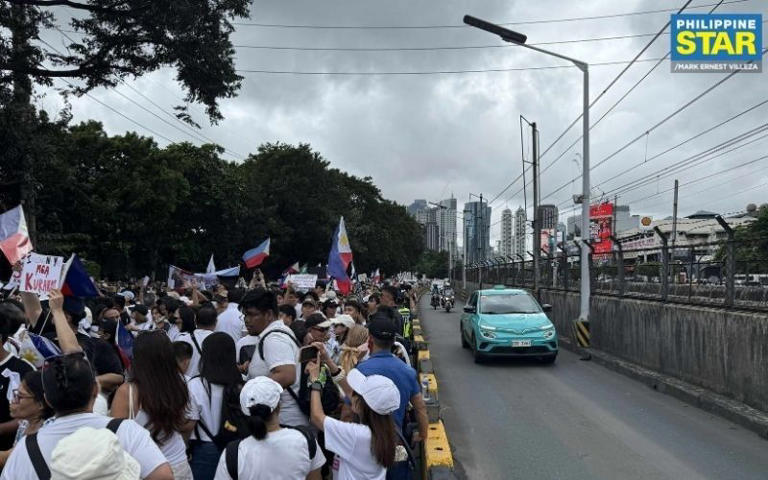

 Massive Protest Erupts: “Trillion Peso March” Targets Flood-Control Corruption Scandal in the Philippines
December 10, 2025
Introduction
What began as whispers of ghost projects and substandard flood-control works has erupted into one of the largest protest movements in recent Philippine history. Dubbed the “Trillion Peso March,” tens to hundreds of thousands of Filipinos, from students to workers, clergy to celebrities, have taken to the streets demanding accountability, transparency, and justice — after it was alleged that as much as ₱1.9 trillion over 15 years was siphoned off in flood-control and related infrastructure projects.
This article dives deep into why the protests erupted, how they unfolded, who’s involved, and what this could mean for the future of governance and civic engagement in the Philippines.
Table of Contents
1. Background — Floods, Corruption and the Philippines’ Vulnerabilities
The Philippines is annually battered by typhoons, heavy rain, and flooding. For decades, flood-control infrastructure, drainage systems and mitigation projects have been critical for the safety and survival of millions. When public funds meant for such projects vanish into alleged “ghost” schemes or poor-quality works, the impact doesn’t remain on paper — it becomes a matter of life and death.
In 2025, mounting evidence surfaced: hundreds of flood-control projects, funded over many years, were either incomplete, of substandard quality, or never realized — despite hundreds of billions of pesos allegedly spent.
For many Filipinos, particularly those in flood-prone areas, the scandal struck a chord: lives lost or disrupted by flood after flood — even though funds had supposedly been mobilized to prevent just that. The anger that simmered under the surface became visible, collective, and vocal.
2. Sparks That Started It All — From Disaster to Revelations
The immediate impetus for public outrage was a series of catastrophic floods and typhoons that devastated multiple regions in 2025, causing widespread death, displacement, and infrastructure damage. In the aftermath, investigative reports and government audits revealed alarming inconsistencies in flood-control projects: inflated budgets, phantom contractors, incomplete works, and repeated failures to deliver.
When senior officials, lawmakers, and contractors were allegedly implicated in diversion of funds, public trust collapsed. What many had accepted as systemic inefficiency now looked like systemic corruption. Civic groups, religious organizations, student activists, and ordinary citizens mobilized. What started as scattered outrage consolidated into a nationwide movement.
3. The First March: September 21, 2025 — “Baha sa Luneta / Trillion Peso March”
September 21 holds symbolic weight in Philippine history — marking the 1972 declaration of martial law. Protest organizers chose this date intentionally, drawing a parallel between past authoritarian abuses and present systemic corruption.
On that day, thousands gathered at key venues — including Rizal Park (Luneta) and the EDSA Shrine — wearing white ribbons as a symbol of unity against graft, and carrying placards demanding justice.
Protests combined prayer sessions, interfaith rituals, music performances, and speeches from survivors of flood-control failures. The mood was solemn but resolute. As one protest leader stated: “This is not just about politics. This is about dignity, accountability, and lives lost to floods.”
Even heavy rain could not quell the protest — thousands stayed, chants filled the streets, motorists honked in solidarity, and the march disrupted regular traffic along major thoroughfares.
Across the country, parallel rallies erupted — in major cities and provinces — signaling that the outcry was not confined to Manila alone.
4. Growth of the Movement — Nationwide Protests & Second March (Nov 30)
Public fury did not subside. In the following weeks, civic, religious, student, labor, and youth organizations coordinated solidarity rallies. On November 30, 2025, the second major mobilization under the “Trillion Peso March” banner drew tens of thousands in Metro Manila and hundreds of thousands nationwide. Organizers estimated between 30,000 and 55,000 in Manila alone, though independent figures varied.
This “second wave” carried sharper demands. Protesters made more explicit calls for the recovery of stolen funds, immediate prosecution of implicated “big fish,” institutional reforms, and an end to systemic corruption.
Some groups cautioned that if credible action was not taken — arrests, indictments, recovery of funds — further mobilizations would follow. The sense among many: this is not a one-time outburst, but a sustained people’s movement.
5. Protesters’ Demands: The Five-Point Call for Reform
Organizers laid out clear, comprehensive demands for the government. Among the core calls were: (Philstar)
Transparency — full disclosure of flood-control projects, budgets, contractors, and expenditures
Forfeiture and Return of Stolen Funds — recovery of public money allegedly siphoned into ghost or substandard projects
Prosecution of Corrupt Officials — from contractors up to high-ranking politicians and executives responsible
Respect for the Constitution — safeguarding democratic processes, preventing political dynasties, and ensuring no interference in investigations
Systemic Reform of Public Works & Disaster Infrastructure — instituting reforms in procurement, oversight, environmental and safety standards
Many protesters also urged a broader reckoning: a transformation in governance culture, away from patronage and impunity, toward accountability and public service.
6. Government Response: Investigation, Resignations, and Political Fallout
Facing mounting pressure, the administration — led by Ferdinand Marcos Jr. — responded by declaring investigations, forming a special commission, and vowing to leave “no sacred cows” untouched.
Some high-profile resignations followed: lawmakers and officials implicated in alleged anomalies stepped down, amid swirling allegations and public backlash.
Government spokespeople acknowledged that billions had been lost due to mismanaged or fraudulent flood-control contracts, and promised lifestyle audits, asset freezes, and criminal charges for offenders.
Yet for many protesters and civil-society watchers, these moves are only a start. The core demand remains: justice — not just investigations or symbolic gestures, but real accountability, restitution, and systemic reform.
7. The Faces in the Crowd — Who’s Marching: Youth, Church, Celebs, Civil Society
One striking feature of the Trillion Peso March: its broad social base. Participants cut across age, class, sector, and affiliation. Among them:
Youth and Students — university walkouts began months earlier; students joined in large numbers, energized by calls for justice and fairness.
Religious Groups & Church Leaders — clergy participated in prayers and interfaith ceremonies; many described the protest as a moral fight against corruption and injustice.
Civil Society & NGOs — anti-corruption advocates, labor groups, environmental organizations, and disaster-survivor networks mobilized, highlighting systemic neglect of vulnerable communities.
Celebrities & Public Figures — a number of artists and media personalities showed up, lending visibility; their involvement reinforced that corruption affects all Filipinos.
Everyday Citizens — flood survivors, families from affected regions, workers, commuters — people who have lived the consequences of failed flood control. Their banners carried messages like “Return our stolen money,” “Protect the People, Not Profits,” “Accountability Now.”
This cross-sectional participation demonstrated that the protest movement was not limited to political activists, but tapped into widespread public anger and demands for justice.
8. Risks, Resistance, and Challenges — From Crowds to Crackdowns
As with any massive protest, the rise of the Trillion Peso March exposed serious risks:
Security & Order: With hundreds of thousands gathering, authorities deployed tens of thousands of police officers — tensions ran high; any spark could ignite conflict.
Political Pressure & Retaliation: Some lawmakers and contractors implicated in corruption cling to power; there is risk of interference, cover-ups, or weak prosecution.
Public Disillusionment: If after repeated protests and investigations no meaningful change ensues, cynicism may replace resolve — a danger for democratic engagement.
Fatigue and Fragmentation: Sustained mobilization demands time, resources, and unity. As seasons change and government pushes deadlines, maintaining cohesion among diverse groups is challenging.
Safety Risks for Vulnerable Protesters: Elderly, children, disaster-affected families — many who joined are especially vulnerable to weather, exhaustion, and possible repression.
Still, for many protesters, those risks are outweighed by the urgency of demanding accountability in a country where lives — not just funds — hang in the balance.
9. Why It Matters — Structural Issues, Climate Risk, and Public Accountability
The Trillion Peso March is more than a protest — it reflects deeper structural crises in the Philippines:
Governance Failure in Disaster-Prone Nation: When flood control — a basic need — is compromised by corruption, the costs are human, not just economic. It underscores the urgency of transparent, competent public works governance in a climate-vulnerable country.
Demand for Institutional Reform: Repeated scandals erode trust; meaningful reform — procurement practices, contract oversight, institutional accountability — becomes critical.
Civic Awakening and Youth Engagement: The prominence of youth, students, and civil society shows rising political consciousness and willingness to demand change.
Power of Collective Voice: Across social strata — religious groups, workers, artists, minorities — the protests display that corruption affects everyone; thus, collective action can force accountability.
Precedent for Future Movements: Whether the movement succeeds or not, it sets a precedent: inaction is no longer tolerated; public resources belong to people, not profiteers.
10. Conclusion — A Movement or a Moment? What Comes Next
The “Trillion Peso March” has demonstrated that public outrage can mobilize quickly, broadly and forcefully. It has shaken the corridors of power, triggered investigations, forced resignations, and renewed debate on governance, climate resilience, and public accountability in the Philippines.
But the true test lies ahead. Will the momentum yield concrete results — real prosecutions, recovery of stolen funds, systemic reform — or will it dissipate into memory and headlines?
For many Filipinos — flood survivors, everyday workers, students, clergy, citizens — this is not just a protest. It’s a fight for dignity, survival, and justice. Whether the Trillion Peso March becomes a turning point or a brief moment of anger depends on sustained public pressure, institutional will, and collective vigilance.
What is clear today: millions are watching, the stakes are high — and the people have spoken.
Al Jazeera
Maritime Fairtrade
Philstar
Asia Media Center
straitstimes.com