
The local pickup segment has long since been dominated by the likes of the Toyota Hilux, Mitsubishi Triton, Nissan Navara, and Ford Ranger. But now, there’s a new brand in town to stir up the competition. Meet Radar, a sub-brand of Geely, and the newest member of the United Asia Automotive Group Inc. (UAAGI).
Radar’s local entry signal’s something new for the hotly contested segment, a vehicle that combines utility and off-road readiness with the benefits of hybrid and electric power. Headlining Radar’s initial model lineup for the Philippines are the RD6 EM-P and the RD6 Econ. The latter is positioned to cater to the Plug-in Hybrid Electric Vehicle (PHEV) segment, while the latter is the brand’s entry in the all-electric vehicle (EV) market.
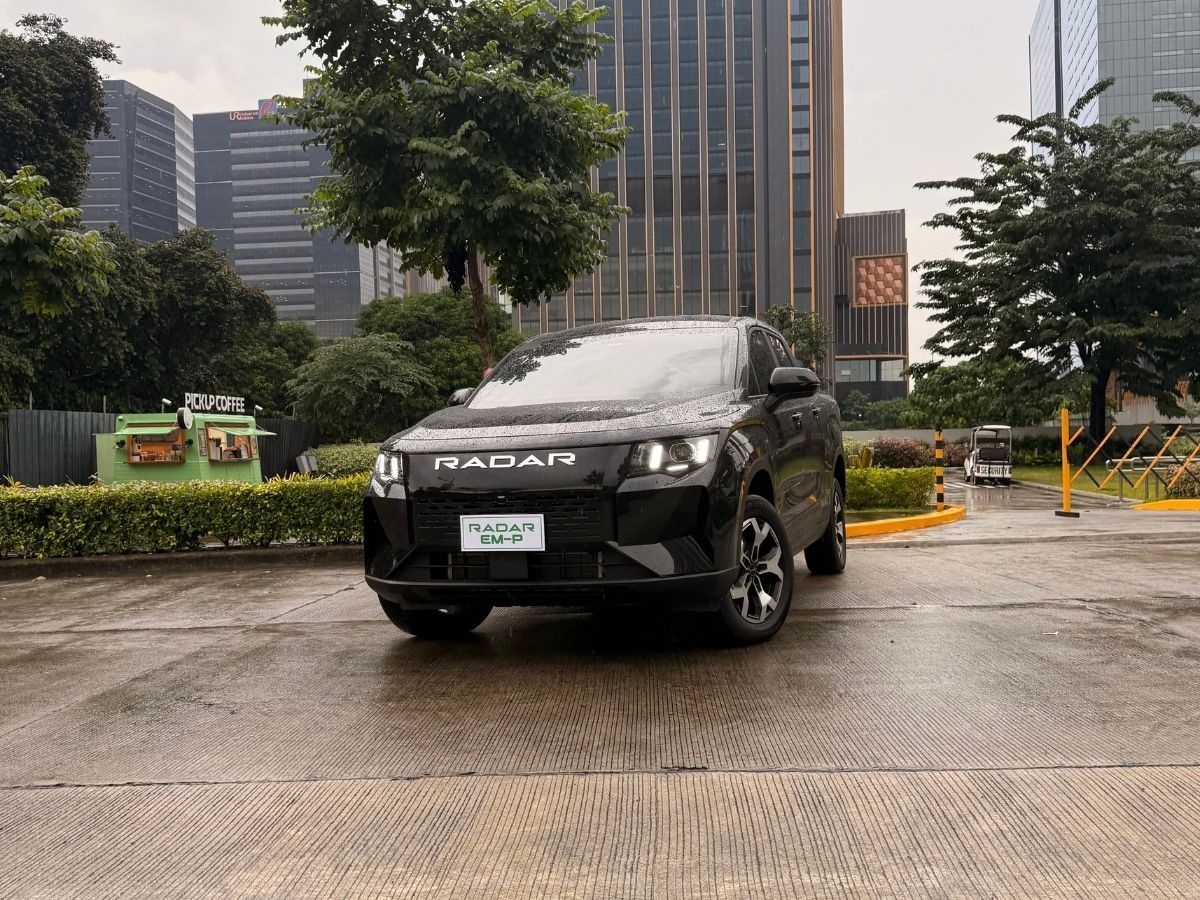
Starting with the RD6 EM-P, it comes in three 4×4 variants: Comfort, Elite, and Luxury. It derives its motivation from a turbocharged 1.5-liter gasoline engine paired with a hybrid system comprising two electric motors, each providing additional propulsion to the front and rear axles. The hybrid powertrain delivers 156 hp and 252 Nm of torque. Radar says that the RD6 EM-P’s total combined powertrain driving range is 1,000 km, with its all-electric mode covering 106 km of that distance.
Meet the Geely’s Radar: The newest electrified challenger

by Randolph de Leon5 days ago5 days ago

The local pickup segment has long since been dominated by the likes of the Toyota Hilux, Mitsubishi Triton, Nissan Navara, and Ford Ranger. But now, there’s a new brand in town to stir up the competition. Meet Radar, a sub-brand of Geely, and the newest member of the United Asia Automotive Group Inc. (UAAGI).
Radar’s local entry signal’s something new for the hotly contested segment, a vehicle that combines utility and off-road readiness with the benefits of hybrid and electric power. Headlining Radar’s initial model lineup for the Philippines are the RD6 EM-P and the RD6 Econ. The latter is positioned to cater to the Plug-in Hybrid Electric Vehicle (PHEV) segment, while the latter is the brand’s entry in the all-electric vehicle (EV) market.
Starting with the RD6 EM-P, it comes in three 4×4 variants: Comfort, Elite, and Luxury. It derives its motivation from a turbocharged 1.5-liter gasoline engine paired with a hybrid system comprising two electric motors, each providing additional propulsion to the front and rear axles. The hybrid powertrain delivers 156 hp and 252 Nm of torque. Radar says that the RD6 EM-P’s total combined powertrain driving range is 1,000 km, with its all-electric mode covering 106 km of that distance.
The Radar RD6 Econ, on the other hand, offers three available variants: 63 kWh 4×2, 73 kWh 4×2, and the range-topping 73 kWh 4×4. As its variants suggest, each trim delivers power in increasing amounts. The entry-level and mid-variant 63KWh 4×2 and 73KWh 4×2 put out the same power at 245 hp, while the 73KWh 4×4 offers a combined output of 381 hp, thanks to its dual electric motors. The same principle goes for torque figures. The 4×2 variants can produce 309 Nm of torque, while the 4×4 is rated at 485 Nm.
Of course, many buyers would go straight to how long the Radar RD6 Econ can reach on one full charge. To address the matter, the 63 KW 4×2 can reach up to 369 km, while the 73KW 4×4 can be driven up to a distance of 443 km. The 73KW 4×4, meanwhile, has an electric driving range of 390 km.
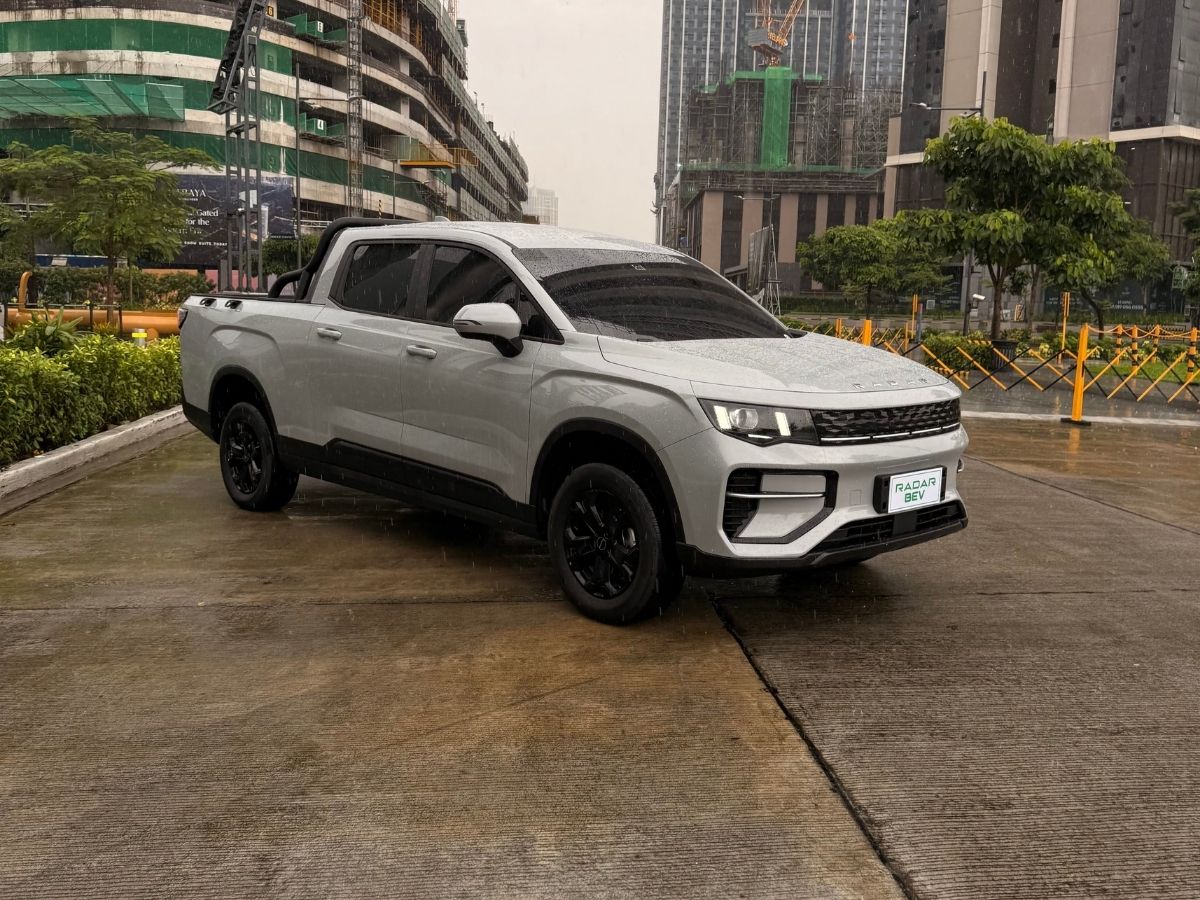
Style-wise, both the RD6 EM-P and the RD7 Econ present a sleek and modern design, offering a different take on the typically muscular and brawny look of a go-anywhere pickup truck, which is ideal for both business and leisure. But some small detail set the two apart.
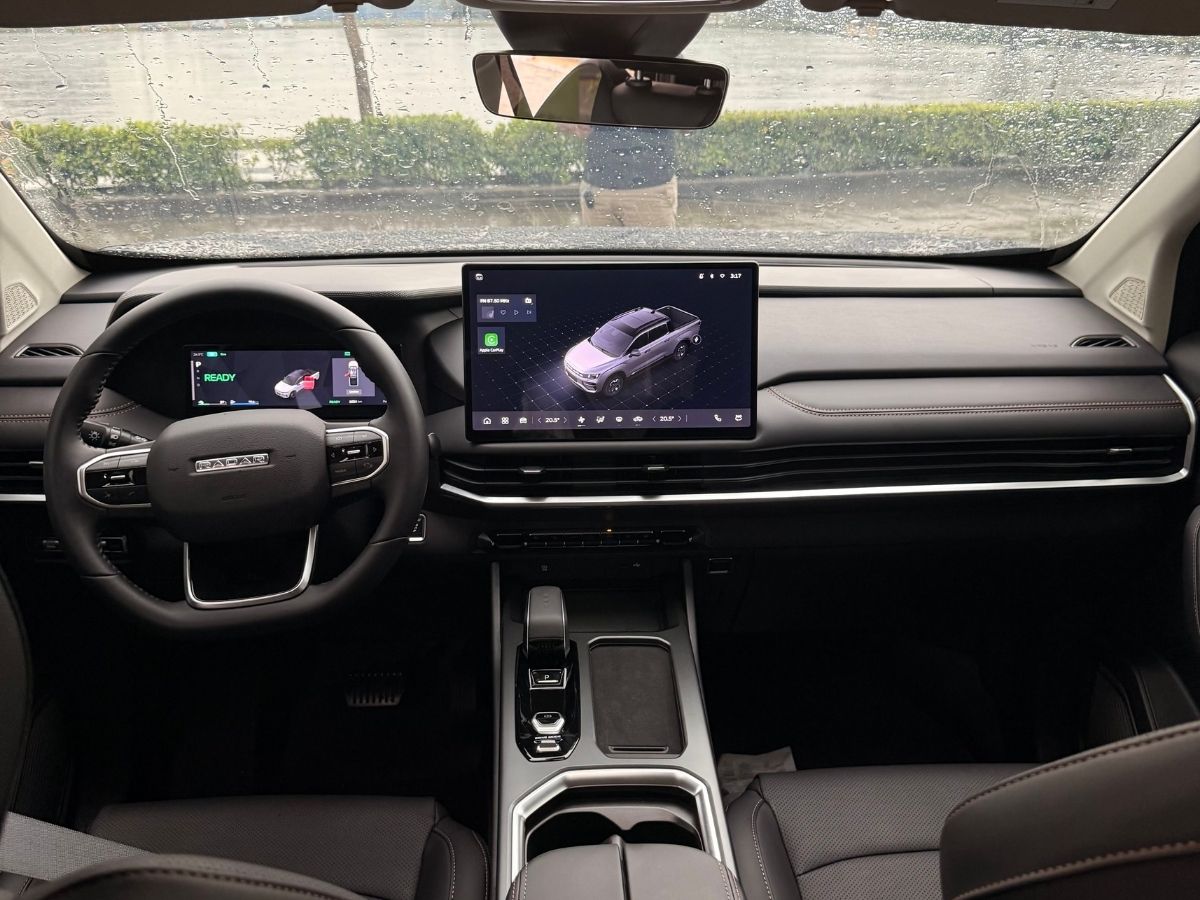
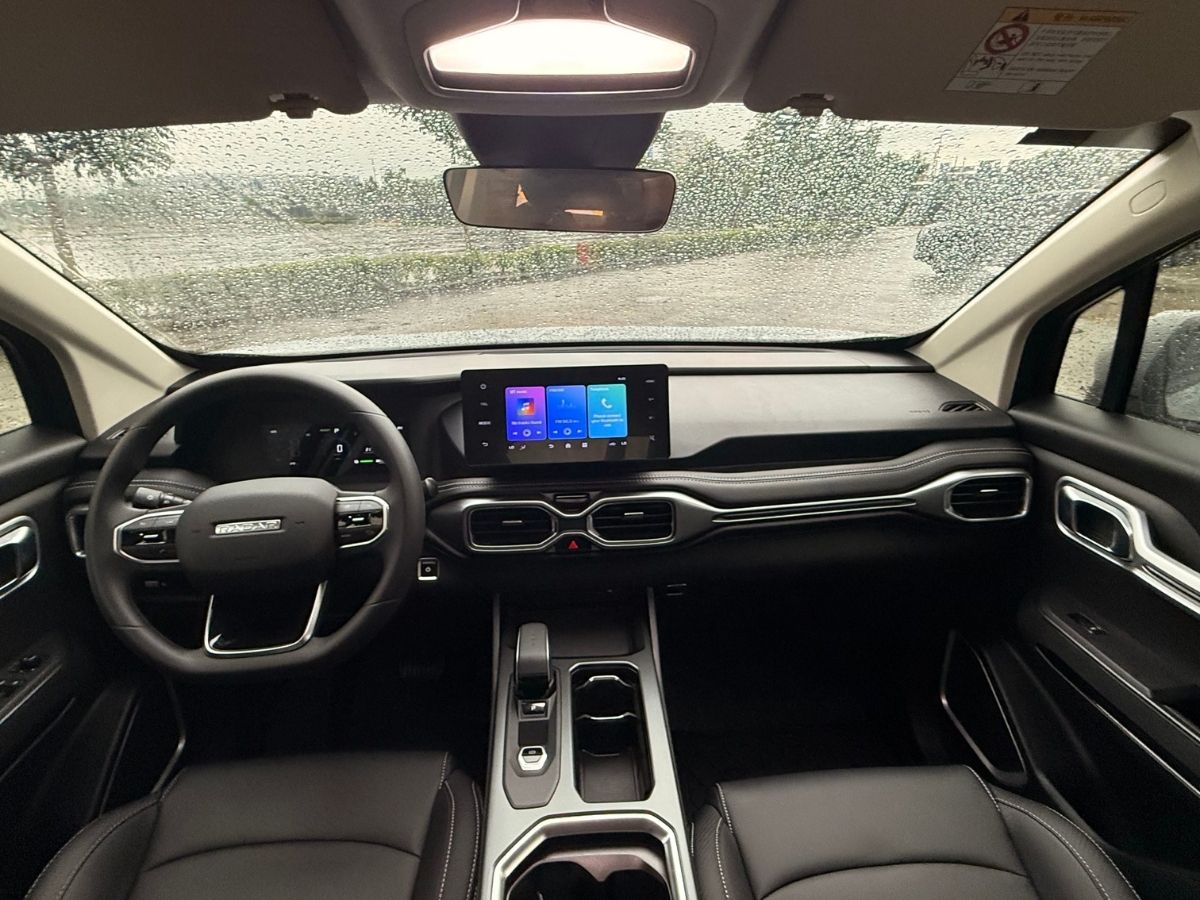
The Radar RD6 EM-P comes with a 14.6-inch floating infotainment system, a panoramic sunroof, power outlets for the vehicle’s V2L (vehicle-to-load) feature, which essentially turns it into a power supply for outdoor or emergency use, and an advanced driver assistance system (ADAS). The RD6 Econ, meanwhile, offers an 8-inch infotainment system, synthetic leather seats, a power-assisted tailgate, an 815 mm water wading depth, and a 1-ton payload capability.
The arrival of Radar in the Philippines marks a significant shift in the landscape of mobility. Pickups have always been valued for their toughness, but Radar is proving that efficiency and sustainability can be part of the equation as well.
Price starts at P1,358,000 for the RD6 Econ and P1,658,000 for the RD6 EM-P.